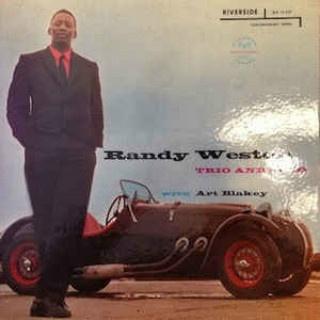
Trio and Solo-Randy Weston曲目列表
|
#
|
歌曲 | 歌手 | 时长 |
|---|---|---|---|
|
1
|
03:47 |
||
|
2
|
03:45 |
||
|
3
|
07:01 |
||
|
4
|
05:07 |
||
|
5
|
03:30 |
||
|
6
|
03:39 |
||
|
7
|
03:59 |
||
|
8
|
04:11 |
||
|
9
|
04:28 |
||
|
10
|
04:06 |
Trio and Solo-Randy Weston专辑介绍
by Alex Henderson
Trio and Solo is an appropriate title for this LP, which finds a young Randy Weston leading a trio on five selections and performing unaccompanied solo piano on the other five. The trio material (which employs
Sam Gill
on bass and the influential
Art Blakey
on drums) was recorded in 1955, whereas most of the solo performances were recorded the following year. In both settings, Weston brings a strong
Thelonious Monk
influence to the table -- the
Monk
influence is impossible to miss, whether Weston is embracing "Little Girl Blue" and
Tadd Dameron
's "If You Could See Me Now" by himself or interpreting "Sweet Sue, Just You" in the company of
Gill
and
Blakey
. But being greatly influenced by someone doesn't mean that you're a slavish, knee-jerk imitator. Just as
Sonny Stitt
realized that being a
Charlie Parker
disciple didn't have to mean being a
Charlie Parker
clone -- and just as
Chet Baker
had a recognizable tone that you could tell from
Miles Davis
' -- Weston never tried to pass himself off as
Monk
. Yes,
Monk
was his greatest influence in 1955 and 1956, but his sound also owed something to
Bud Powell
. And what you hear on this bop-oriented record is a young improviser who loved and admired
Monk
's angular, cerebral pianism, but also realized the importance of being his own person. You also hear a flexible musician who was open to a variety of musical situations; Weston sounds as inspired by himself as he does in the company of
Gill
and
Blakey
. Trio and Solo isn't as essential as some of Weston's 1960s recordings, but for those who are devoted fans of the pianist, these early performances offer considerable rewards.